On Governance
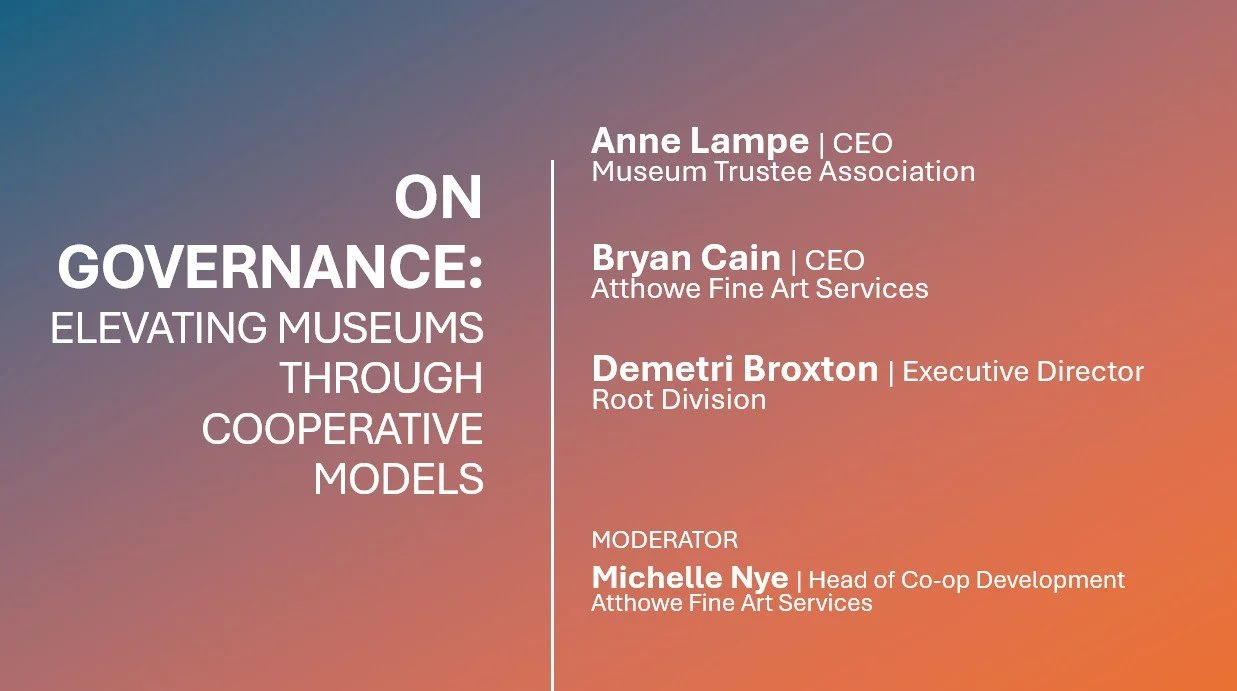
Reimagining Museum Governance: Lessons from Cooperative Models
WMA 2025 Panel Recap — “On Governance: Elevating Museums Through Cooperative Models”
By Michelle Nye, Moderator & Head of Co-op Development, Atthowe Fine Art Services
What if museums were governed more like community cooperatives? What if board seats were decided by elections that included museum stakeholders beyond the board room? What if a museum member could run for a board seat? Or a staff member? What if museum members could have increased voice in the governance process and be polled or even vote on where their membership dollars went in the annual budget?
At WMA 2025’s “On Governance” panel, we explored these possibilities—and more—with expert panelists from cooperative, arts, and museum leadership.
Our conversation centered on how principles from worker and consumer cooperatives—such as democratic decision-making, increased community participation, and transparency—could inspire new pathways for museums to deepen trust and engagement across their institutions.
Panelists included:
Bryan Cain, CEO of Atthowe Fine Art Services
Demetri Broxton, Executive Director of Root Division
Anne Lampe, CEO of Museum Trustees Association
Framing Good Governance: A Trustee’s Perspective
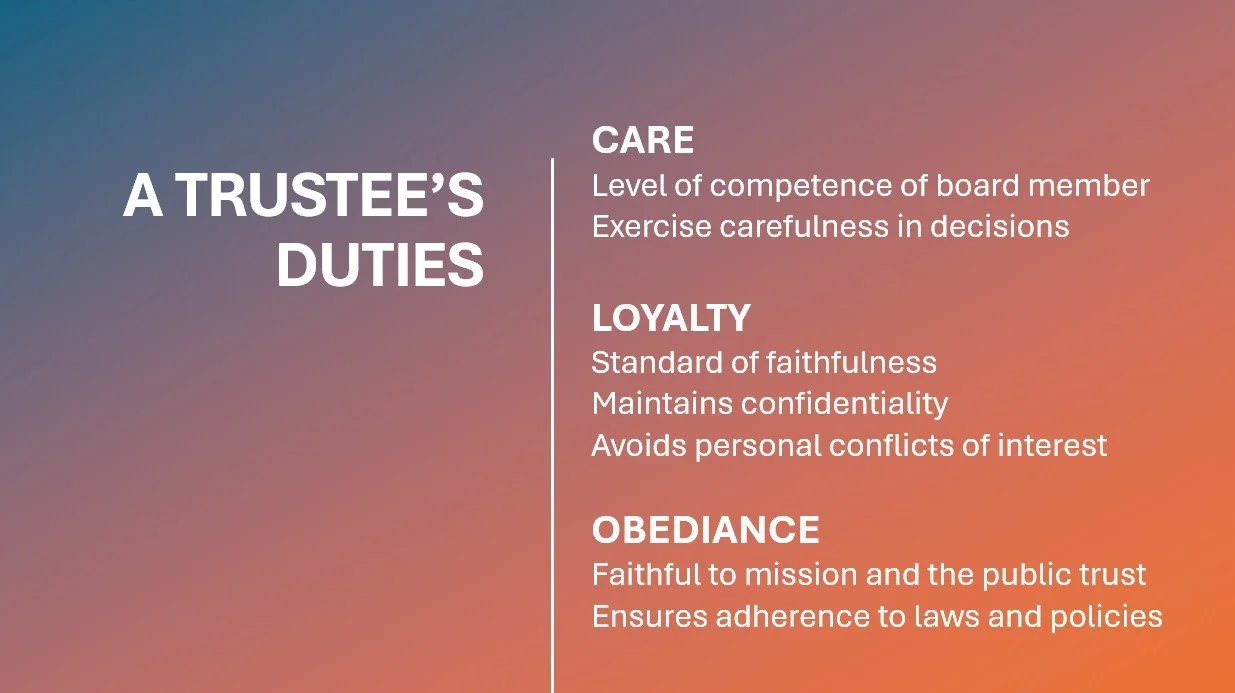
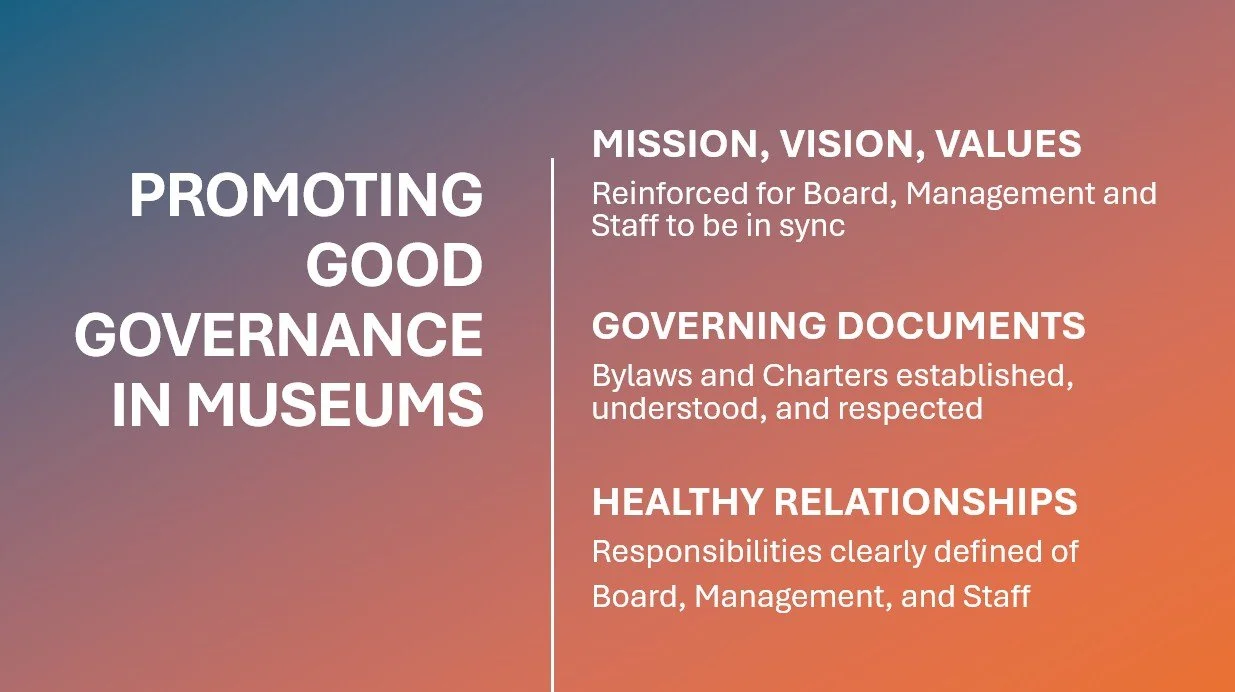
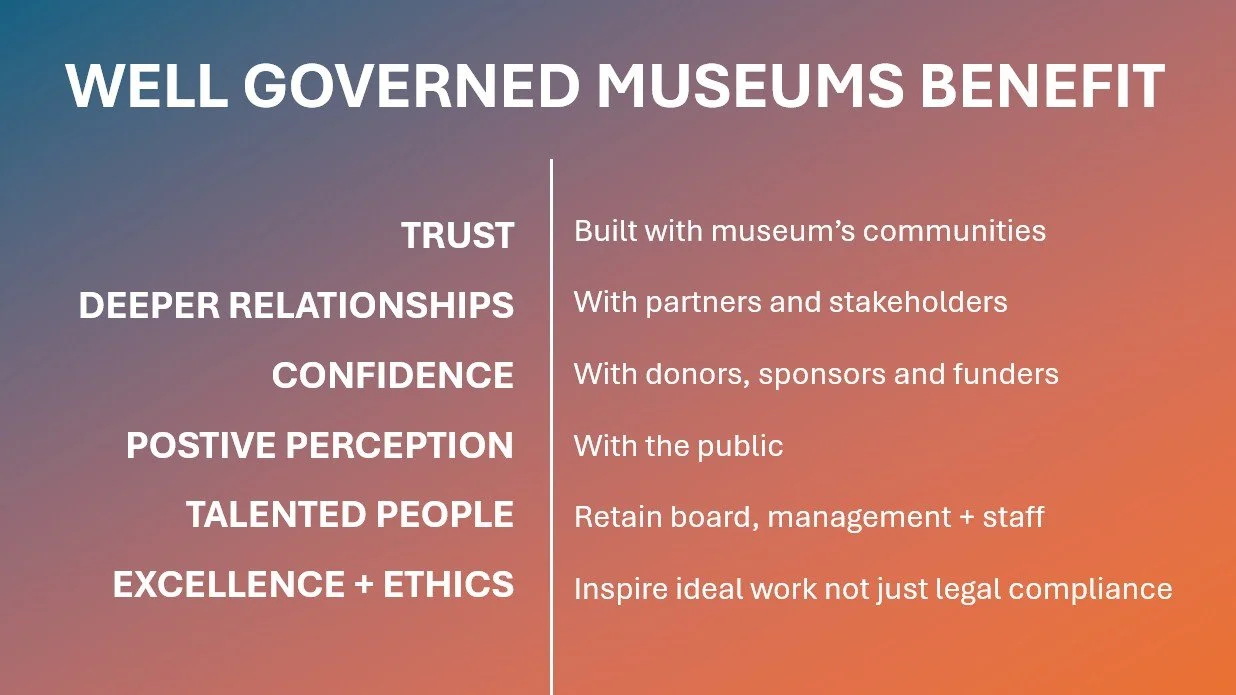
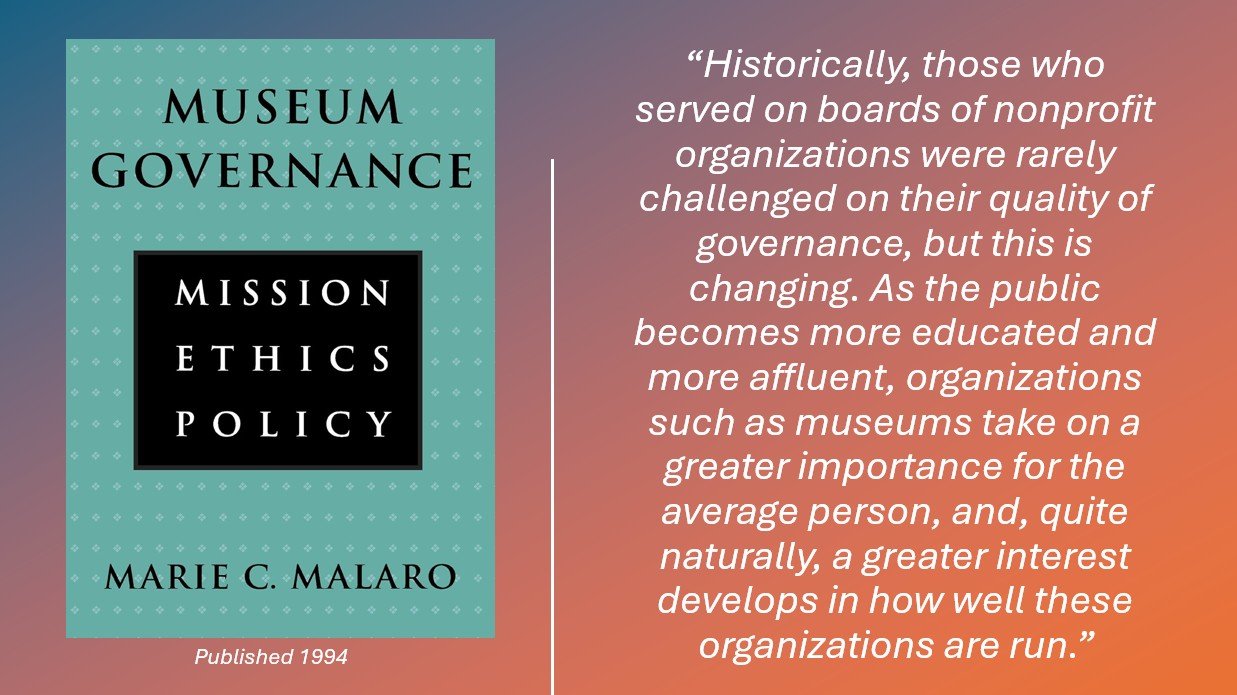
Anne Lampe—a longtime museum professional, with experience as a Curator, Museum Director and now supporting and educating Trustees in her role as CEO of Museum Trustee Association—opened the session by grounding the audience in fundamental principles of board governance and trustee responsibility. Her framing emphasized that well-governed museums are built on clarity of mission, strong bylaws, healthy board-staff relationships, and clearly defined roles. She reminded us that trustees have a duty of care, loyalty, and obedience, and that when these duties are met, museums earn public trust and build deeper relationships with their communities, funders, and stakeholders. Anne emphasized that we see governance as a dynamic and evolving practice, not just legal compliance, and outlined best practices like board composition that reflects the diversity of the communities served, transparent communication, and clearly defined oversight. Her emphasis on governance as a value-based structure set the tone for the dialogue that followed.

Cooperative Models in the Museum World

I then began exploring cooperative principles in governance with a provocation and thought exercise: What would a community co-op museum look like? The seed of this query came from the futurist Rob Hopkins, who’s keynote of the AMM Futures of Museum Summit 2024 suggested that future museums could (and perhaps should) aspire to be community cooperatives.
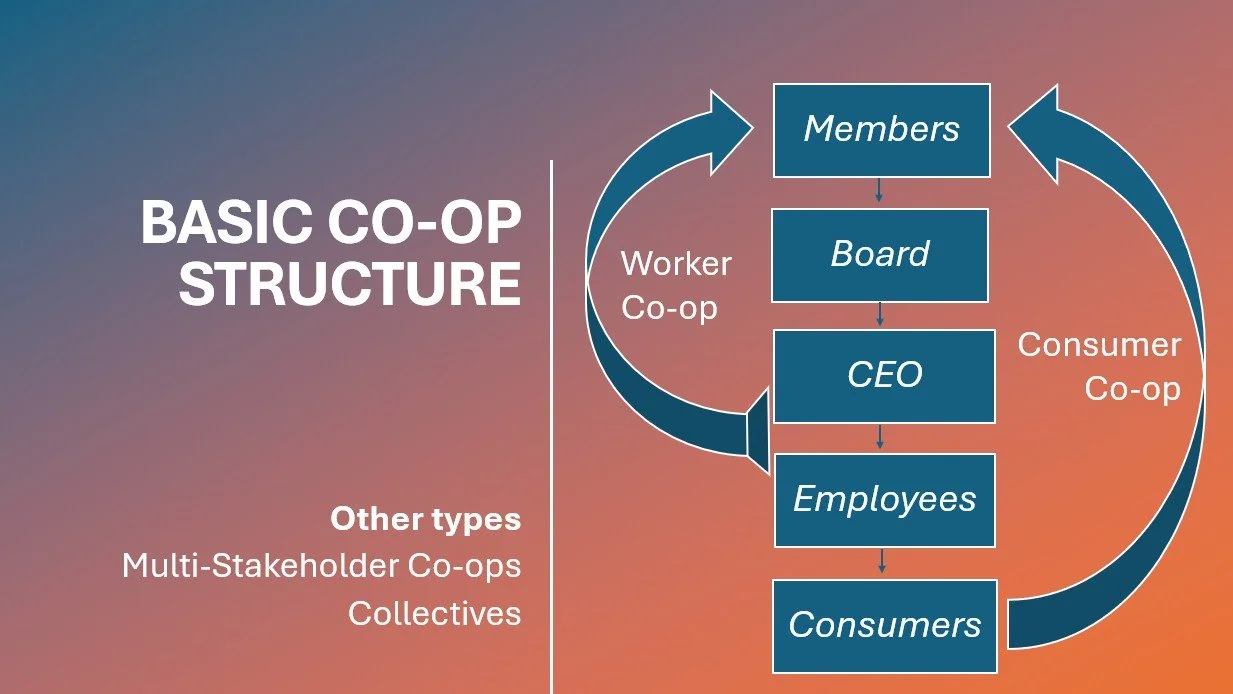
I sketched the current cooperative governance landscape to frame the conversation around how to envision a theoretical ‘co-op museum’. I contrasted consumer co-ops like REI with worker co-ops like Atthowe—and explored structures where theoretical co-op museum members or stakeholders might:
Vote on board representatives
Direct surplus funds (like membership fees) toward specific programs
Serve on advisory committees or rotating governance councils
I also introduced the seven principles of cooperatives—which frame how any institution, not just co-ops, might foster trust, participation, and equity.
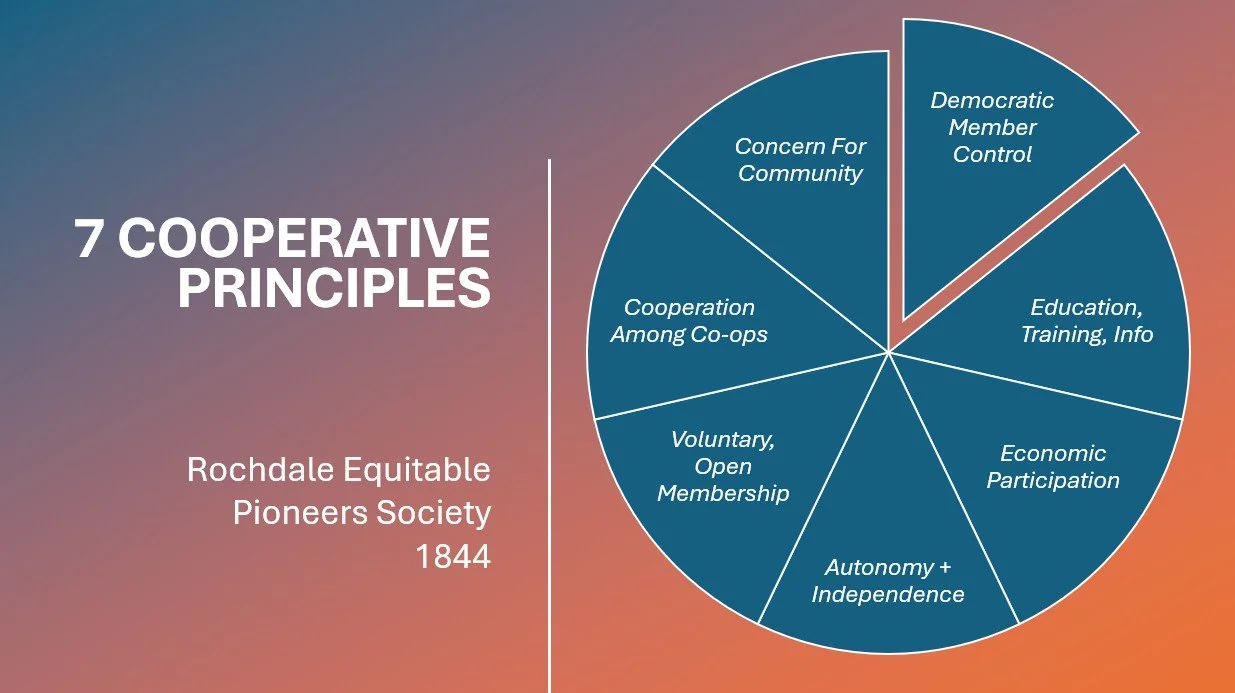
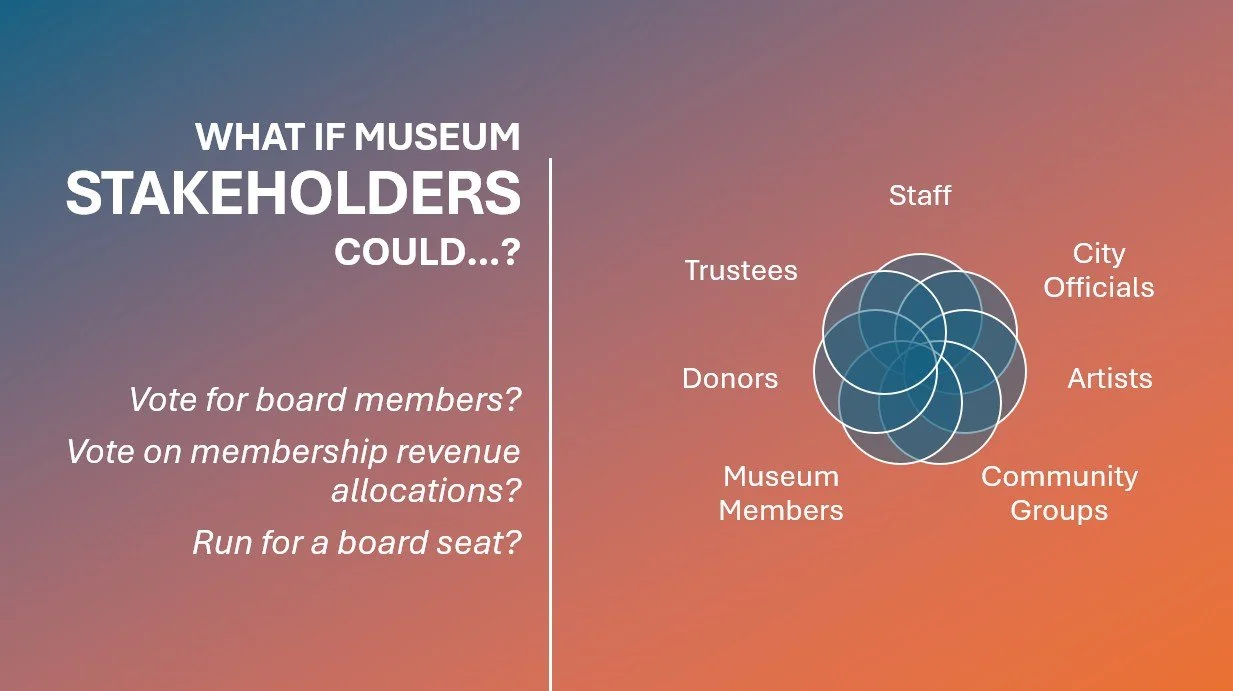
Note: In acknowledgment of the short timeframe of our panel we limited the dialogue about our hypothetical museum co-op away from the legal complexities of ownership and instead highlighted the inspirational potentials of the two cooperative principles of Democratic Member Control and Education, Info, and Training.
Democratic Workplaces in Action: Atthowe’s Story
Bryan Cain then shared Atthowe Fine Art Services’ journey transitioning to a worker-owned cooperative. As CEO of a company founded over 50 years ago, he walked through how this shift elevated employee voice, deepened trust, and institutionalized democratic decision-making practices—from board elections to profit allocations. He emphasized how other cooperative practices like full member voting, rotating committee participation, and committee review of key strategies have increased employee engagement and accountability—benefiting both internal culture and client outcomes.
Community Engagement Through Governance: A Curator’s View
Demetri Broxton built on Bryan’s insights with reflections from his leadership at Root Division, as well as past work with the City of Berkeley and MOAD. He described the power of engaging artists and community members in curatorial decision-making and board development—offering examples where shared leadership enhanced both program quality and community trust. The audience heard about other exemplary institutions incorporating community centered curatorial approaches, like the Wing Luke Museum in Seattle and the de Young’s recent interpretive initiatives, where exhibition labels were reimagined in collaboration with Indigenous and local community partners. Rather than speaking solely through a curatorial voice, these interpretive texts were co-authored to reflect living perspectives, correct colonial framings, and ensure that descendants and cultural stewards shaped how their stories and histories were presented.
Board Culture and Inclusive Leadership: The Trustee Perspective
Anne Lampe brought the trustee and executive leadership lens, highlighting how museum boards have historically shifted away from traditional donor-centered models to incorporate cooperative elements with increased participation from community stakeholders and internal departmental insight. She underscored the importance of board diversification not just in small measures but in effective influence, advocating for strategies like the “rule of 3”—ensuring that at least three individuals from a museum’s underrepresented stakeholder group are present to support meaningful impact. She also gave several the examples of museums that are advanced in in their embrace of cooperative principles—and how those changes can strengthen board efficacy during times of change.
Audience Reflections & Takeaways
We invited the audience to share their questions and ideas on engaging more voices in museum governance. One example of an interesting reflection that emerged was a call for more research on the legal structures of co-ops and their applicability in museums: ie could co-ops offer alternative models at this time when the status of 501(c)3 legalities are at risk? An interesting idea we’d love to explore more at this challenging time for non-profits and museums.
Closing Thoughts: Building Trust Through Structure
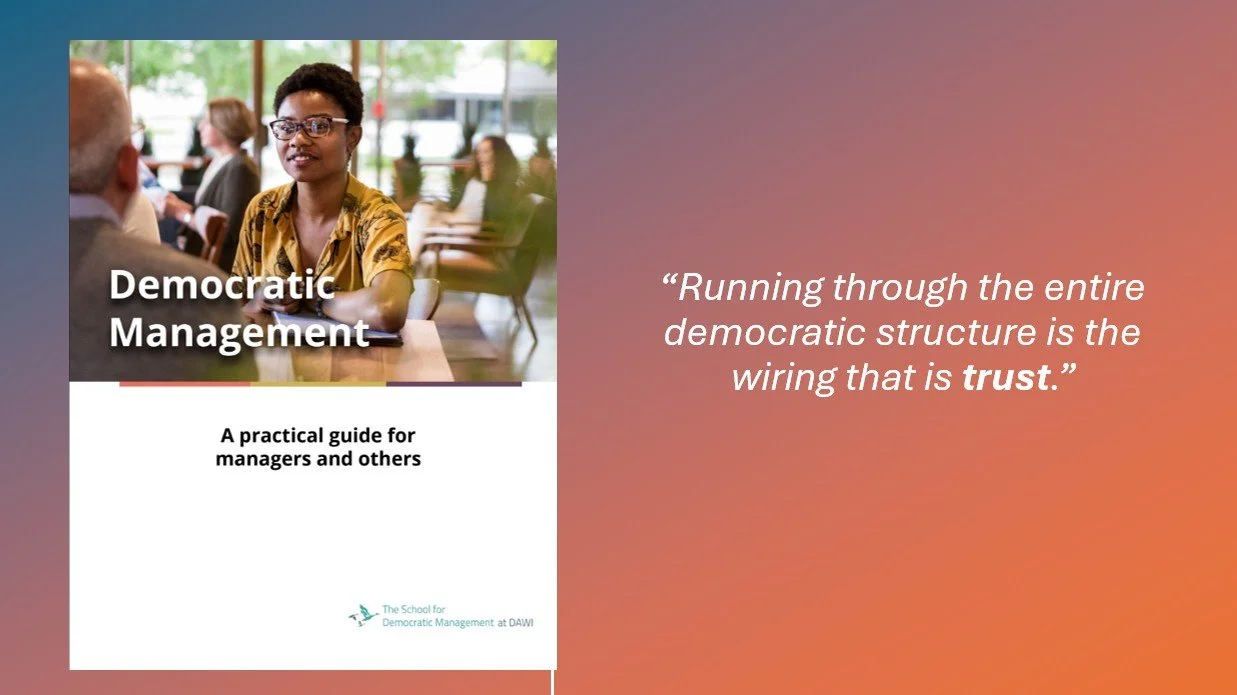
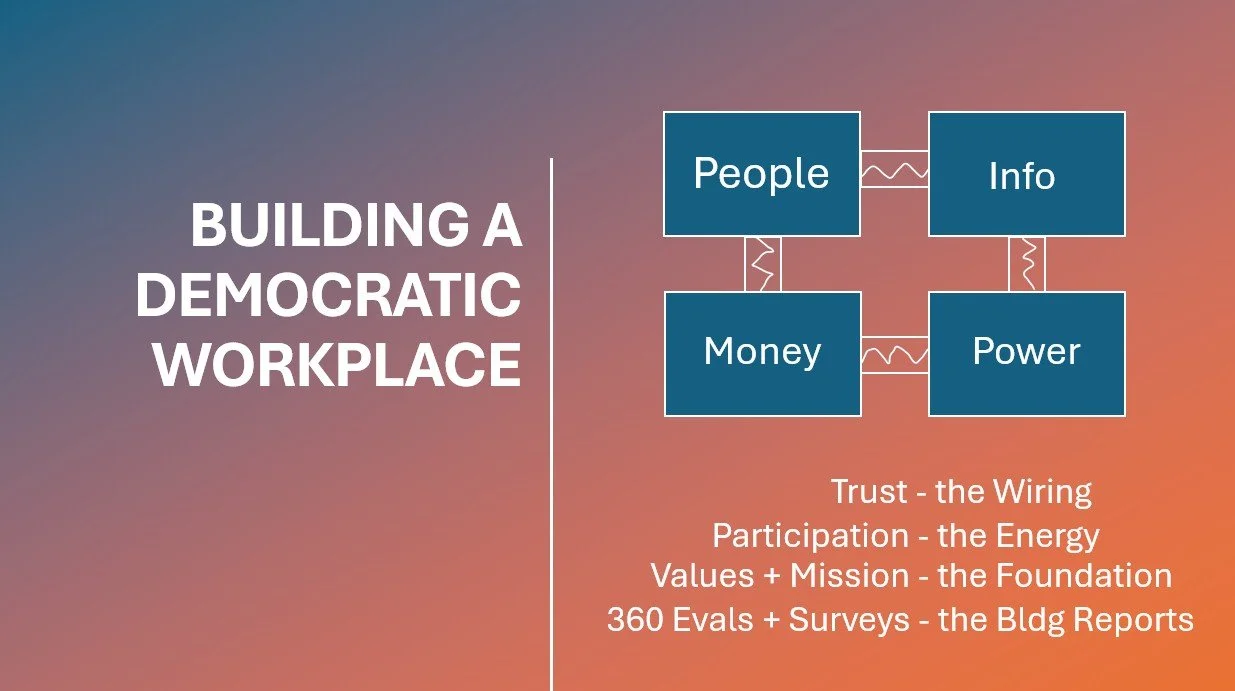
In closing, I returned to the idea that trust is the wiring of democracy. Whether in a cooperative or a museum, if people don’t believe the system is designed to include and support them, cynicism grows.
Yet with clearly ingrained participatory mechanisms—elected seats, shared committees, open info sharing—we can steward that trust. Cooperative tools offer practical pathways toward institutions that are truly accountable, transparent, and community-powered.
Stay Connected
We’re grateful to WMA for including this panel in their 2025 annual conference Elevate, and grateful to all who joined us in person. We invite ongoing dialogue so please reach out if you’re exploring these ideas in your own organization—we’d love to share notes.
With gratitude, and in the spirit of cooperative upliftment!
Michelle Nye, Head of Co-op Development of Atthowe Fine Art Services
Panelists
Anne Lampe – CEO, Museum Trustee Association
Bryan Cain – CEO, Atthowe Fine Art Services
Demetri Broxton – Executive Director, Root Division
Michelle Nye – Moderator & Head of Co-op Development, Atthowe
Resources:
• Slideshow for talk: SlideShow - WMA Panel 2025.pptx
• Democracy at Work Institute’s Democratic Management: A Practical Guide
• Museum Association (UK): Power to the People: A self assessment framework for participatory practice
• National cooperative Business Association CLUSA International: Consumer Co-ops - NCBA CLUSA
• AAM: Museum Board Leadership 2024
• Museum Trustee Association: Building Museum Boards by D. Fischer + L. Roberts
• Association of Art Museum Directors: Professional Practices in Art Museums
• Article: How are nonprofits and co-ops different? – Cooperative Development Institute
• Article: Words Matter: A New Approach to Interpretation
• Project Equity | Discover the power of employee ownership
• U.S. Federation of Worker Cooperatives – Farther, Faster, Together