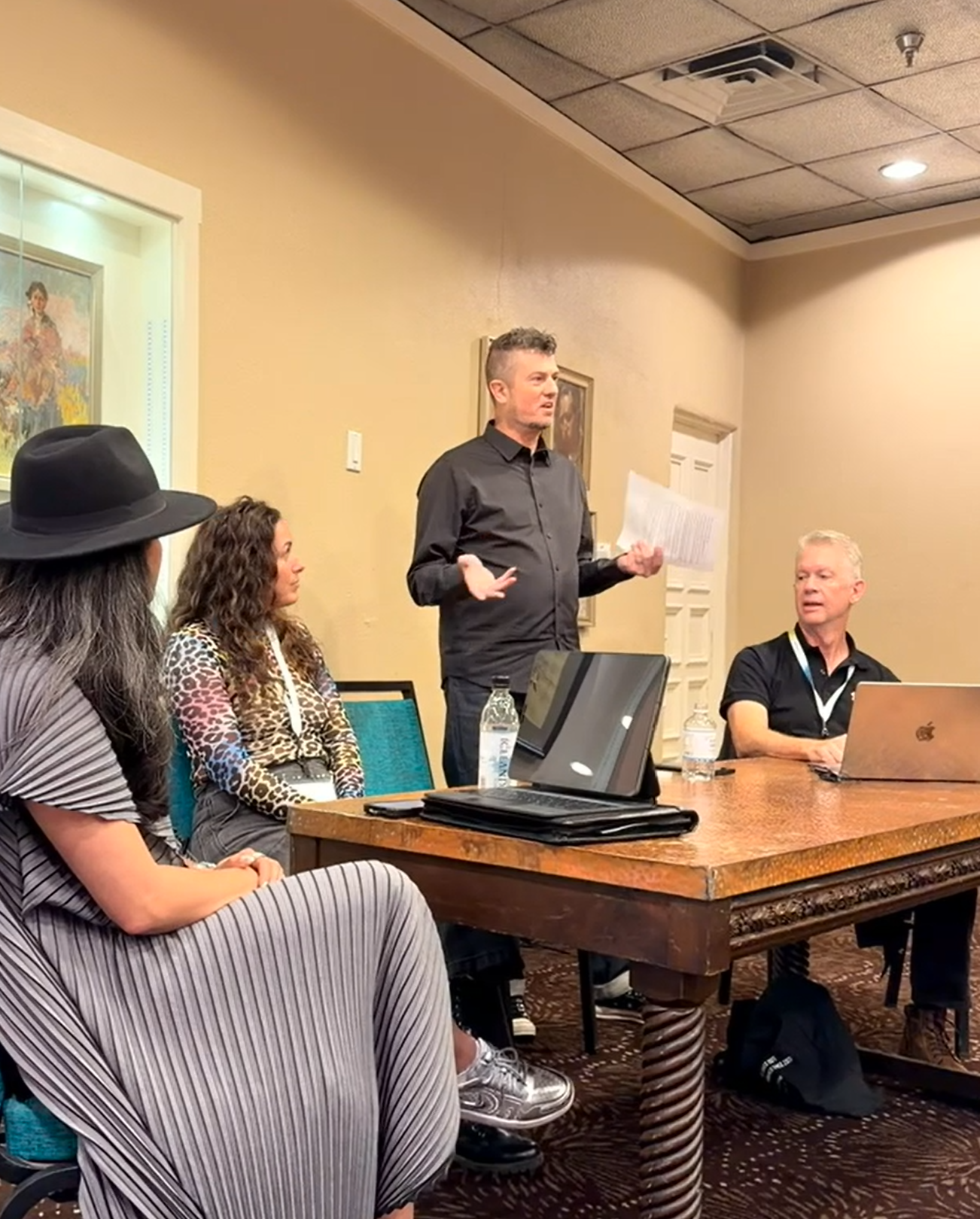
At CODAsummit 2026 in Santa Fe, New Mexico, Atthowe Senior Project Manager David Martin spoke on the panel, AI to Installation: Turning Digital Concepts into Buildable Public Art. Fellow panelists included Brett Barney, President and CEO of American Fine Arts Foundry; Gazelle Dasti, artist, engineer and public sculpture technologist; and Selinda Martinez, Principal of Rbhu Engineering. Together they looked at the potentials and constraints of turning designs generated with AI into artworks that can be engineered, fabricated, and installed safely in a public space.
An installer's view of AI
David Martin’s panel reflections:
As a public art installer, I work at the far downstream end of the process—where artistic intent, engineering, fabrication, logistics, rigging, cranes, and real-world site conditions all have to come together in a finished installation. At that point, the idea has to become physical.
AI is already useful in my workplace for research, technical questions, document review, and identifying potential problems. I see real value in AI as another set of eyes—especially for reviewing drawings, contracts, and complex information before work begins. But installation depends on more than information. It depends on experience, judgment, trust, and accountability.
The construction world has spent generations building a "circle of assurance" around those responsibilities through structural drawings, permits, RFIs, stamped calculations, and inspections. AI can advise, but it does not yet occupy a responsible position within that circle.
My big decisions sound more like this: Can I actually put the crane where we need it to go? What happens when the sculpture is on the hook and behaves differently than we expected? And what do we do when the site in front of us isn’t quite the site shown on the drawings?
When I hit a difficult problem, my first move isn’t to solve it alone. Frankly, I don’t want all that responsibility and stress for myself. I want good people around me. Our support team and crew, along with the engineers, fabricators, crane operators, riggers, and inspectors we work with, have lived through difficult installations, solved real problems—and somehow come back to do it all again. That collective experience is one of the most valuable tools I have.
With the forces we put into play, especially with cranes, small choices can have dynamic results. Because when a twenty-thousand-pound sculpture is hanging from a crane, eventually somebody has to say: “Yes. This is safe. Do it.” And somebody has to own that decision.
For now, I see AI as a valuable second opinion—not the responsible party. The last mile of public art is not only an information problem; it is a responsibility problem. As AI becomes more integrated into installation, we will need to decide where trust and accountability ultimately live.
I don’t judge a successful piece of public art by how closely it resembles the original rendering. I judge it by how much of the artist’s original intent survives the rigors of engineering, fabrication, and installation—and by what happens when the community finally encounters it.
As David explained, engineers, crane operators, riggers, and project managers check one another's work long before any artwork leaves the ground. As a worker-owned cooperative, we see that shared accountability as part of our DNA, and for now, AI sits outside the ‘circle of assurance’.
Like many in our field, we’re actively evaluating the risks and benefits of AI. That review builds on our ICEFAT-certified data security protocols, and on a commitment to restrict the use of confidential data in AI tools. In addition, with the help of our Greening Committee, our review includes a broader evaluation of AI’s environmental costs.
Three days in Santa Fe
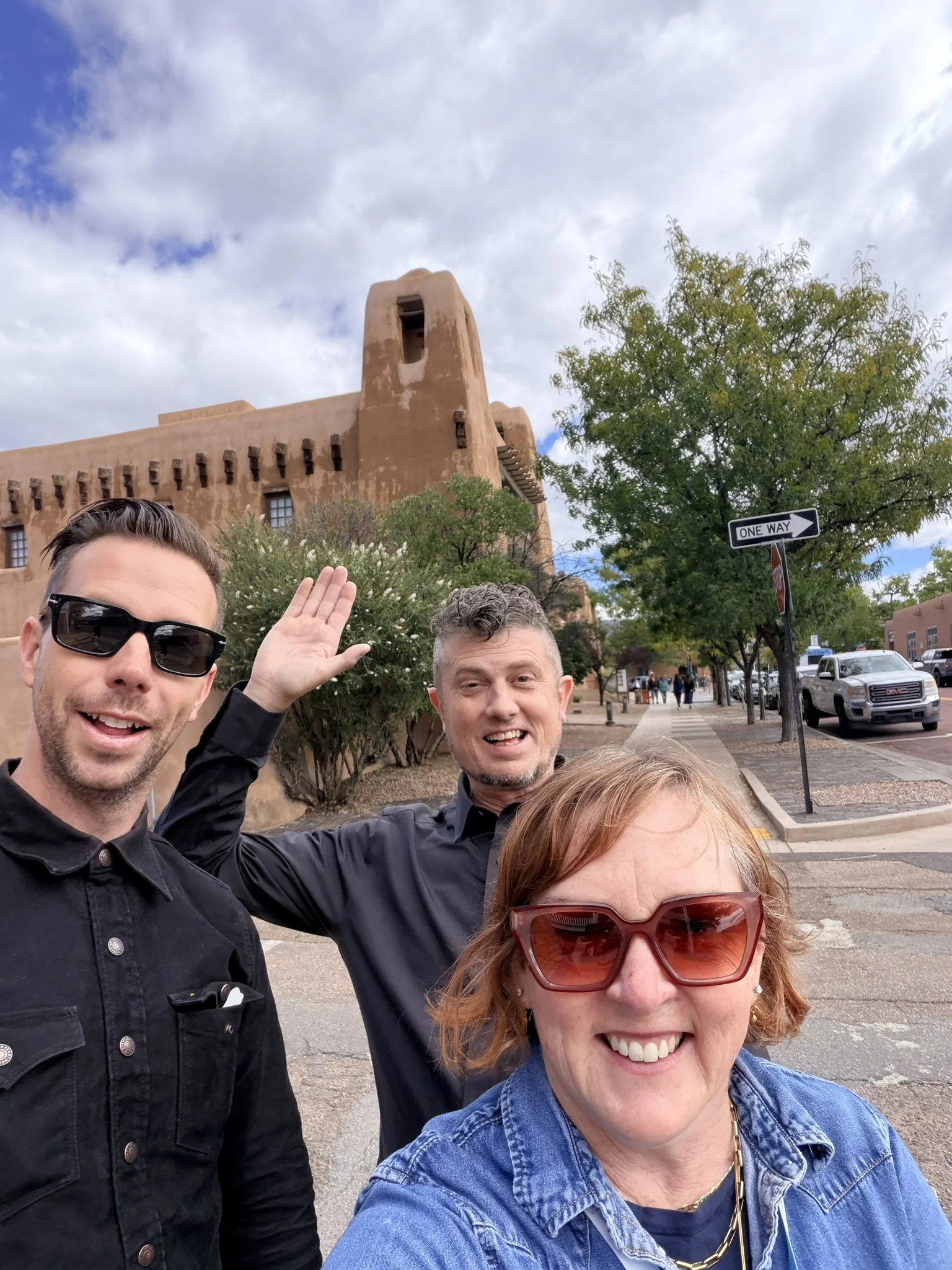
David was joined at the three-day summit by other key members of the Special Projects team, including Jenn Doyle Crane (Head of Special Projects) and Benaiah Seilen (Head Rigger). Highlights of the gathering included Virgil Ortiz's inspirational opening remarks and the excellent closing presentation from Moment Factory, to name just a few.
Overall, what we love about CODAsummit is that it is a convening of the whole chain of the public art community: artists, commissioners, architects, planners, engineers, fabricators, and technologists. These are the people our Special Projects team work with every day, often for months or years before our technicians and cranes arrive on site, and so we value this annual convergence of our networks near and far.
Thank you to all the organizers and fabulous presenters and participants we connected with in Santa Fe!
CODAawards 2025
Other CODA highlights this year included a nod to an Atthowe installation of Hiroshi Sugimoto's Point of Infinity: Surface of Revolution with Constant Negative Curvature which made the 2025 CODAawards Top 100. We are grateful for the recognition because the artwork epitomizes what Atthowe’s Special Projects team does best: bringing monumental sculpture to life, from initial concept to final installation, over a multi-year collaboration process with incredible partners.
Read the project details in the article Celebrating Top 100: Point of Infinity →